Retirement Life
20 May 2026
Is your retirement income plan on track?
Times are tough, and it doesn't look like relief is on the way for retirees anytime soon. But putting your head in the sand and continuing to spend blindly are not options that will help anyone.
With the 1 April NZ Superannuation increases now flowing through to your bank accounts, it’s a good time to review your budget and reassess your retirement income plan.
Critically, retirement income plans are not set-and-forget. An annual check-in is vital to ensure your plan is on track. It also means you're well-positioned to make changes before it's too late.
Review your budget
Firstly, you need to have a clear idea of how much you are spending today – because it's likely to be quite different to April last year – almost everything has gone up in price.
Review your expenses:
- Fixed expenses: rates, insurance, vehicle registration, and subscriptions
- Variable expenses: food, power, petrol, and transport
- Discretionary spending: travel, hobbies, clothing and entertainment
Review your current income streams:
- What has gone up? NZ Super has increased, and if you have an inflation-linked Lifetime Retirement Income, that should have adjusted too.
- Do you still have other income streams, such as rental income and/or part-time work?
- Have any income sources decreased or stopped altogether?
Note all these income streams down and include any changes.
The critical question: Upon your review, is your retirement income still covering your day-to-day expenses? If the answer is no, you're not alone – and it may be time to change your plan.
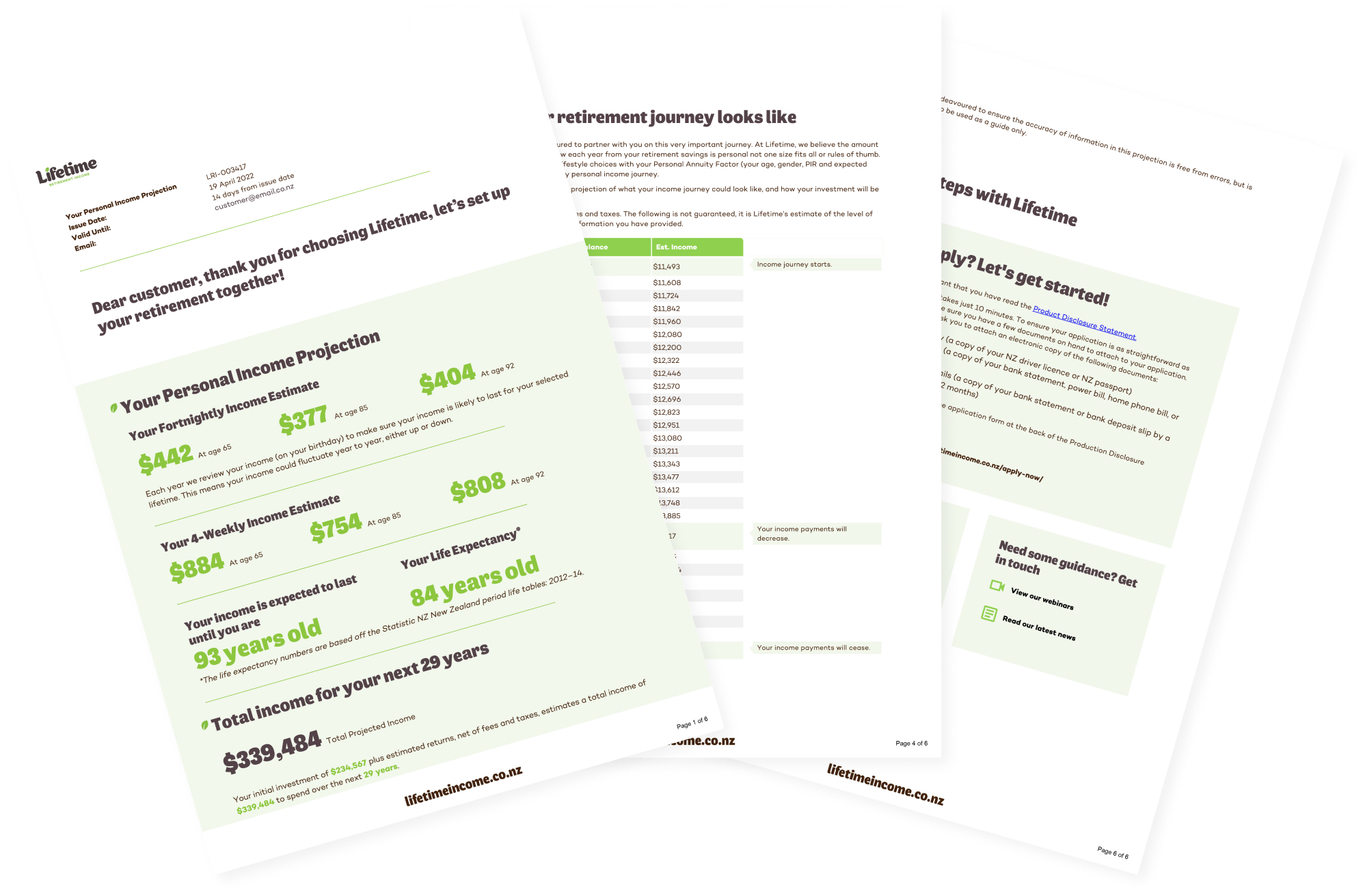
How much could you get a fortnight?


Take full advantage of your entitlements
As well as NZ Super, there are several other valuable benefits retirees might be entitled to which could help reduce day-to-day living costs:
The Winter Energy Payment: These started 1 May, and are paid until 1 October. If you are on NZ Super it's paid automatically, providing extra support during the colder months.
Community Services Card: Reduces healthcare costs for low-income earners and those receiving certain government benefits (such as the accommodation or residential care supplements) – superannuitants included.
SuperGold Card: You should receive this around the same time as your NZ Super payments start. It provides a wealth of benefits and discounts, including for transport, groceries, entertainment, and health and wellbeing services. It's worth asking whether there's a SuperGold discount whenever you pay for or book something. Every little bit helps.
Don't be scared to spend your capital
Many retirees are hesitant to touch their savings, preferring to live only on the income their investments generate. While this approach feels safe, it can mean unnecessarily restricting your lifestyle – especially when you've worked hard to build that nest egg.
It's essential to think long term – longer than you might expect. Actuaries who specialise in mortality risk suggest that people retiring these days should assume they'll live to between 90 and 95 years old. That means you'll need an income that lasts up to 30 years.
The key is finding the right balance: drawing down enough to enjoy your retirement without running out of money too soon.
If capital drawdown is not part of your plan, you may not be getting the most out of your retirement income. At Lifetime Retirement Income, we know this can be a scary concept to manage on your own – which is why we developed the Lifetime Retirement Income Fund.
Know your retirement income options
Historically, term deposits and property investments shaped many Kiwis' retirement income plans. But today, there are more options available, each with different benefits and trade-offs.
Traditional options
Term deposits: Provide security and fixed returns, but in today's environment, interest rates may not keep pace with inflation, meaning your purchasing power gradually erodes.
Rental property: Can provide regular income, but comes with management responsibilities, maintenance costs, and the risk of periods without tenants. It also ties up a significant portion of your wealth in a single asset.
KiwiSaver and investment funds: Can continue to grow in retirement, but you'll need to manage withdrawals to ensure your money lasts carefully.
Modern solutions from Lifetime Retirement Income
Lifetime Retirement Income Fund
This is a managed drawdown fund designed specifically for retirees. It invests your retirement savings in a diversified portfolio. Then it distributes your savings and the investment returns (after fees and taxes) in regular fortnightly income payments that can continue for your nominated lifetime.
How it works:
- Your capital is invested in a balanced portfolio managed by professional investment managers.
- You receive regular fortnightly income payments directly to your bank account.
- The fund is designed to provide income for your nominated lifetime (typically to age 90-95).
- Each year on your birthday, your income is recalculated based on your remaining balance, investment returns, and life expectancy.
- Payments are not guaranteed and may change from one year to the next based on fund performance and your circumstances.
Key benefits:
- Takes the guesswork out of how much you can safely withdraw each year.
- Provides professional investment management.
- Gives a regular, predictable income stream.
- Is flexible to adjust as your circumstances change.
Get a Free Info Pack: Request Pack

Lifetime Home
If you're one of the thousands of Kiwi retirees who have a mortgage-free home but are struggling to get by on NZ Super alone, tapping into your home's equity could be an option worth considering.
Lifetime Home is NZ's first and only debt-free home equity release product. Unlike reverse mortgages, which create debt, Lifetime Home allows you to sell a minority share of your home, at a discount, in exchange for a fortnightly income stream spanning up to 10 years.
How it works:
- You sell a predetermined share of your home to Lifetime.
- You continue living in your home for as long as you wish.
- You receive regular fortnightly income payments for up to 10 years, with the ability to extend for an additional five years.
- When you eventually sell or move, Lifetime Home receives its share of the sale proceeds.
- No interest accumulates, and no debt is created.
Key benefits:
- Unlocks the wealth in your home without selling or moving.
- Is a debt-free solution – no compounding interest eating into your equity.
- Provides a predictable income for 10 years.
- Can be life-changing for those struggling on NZ Super alone.
Get a Free Info Pack: Request Pack
Don't 'set-and-forget' your retirement income plan
An income derived from the gradual drawdown of savings over a long period needs to be managed carefully. Plans should be reviewed at least once a year to ensure the amount being withdrawn is sustainable, or whether your income should be tweaked to reflect fluctuating investment returns, inflation, or mortality risk.
What you should review annually:
- Have your expenses increased more than expected?
- Are your income sources keeping pace with inflation?
- Has your health or life expectancy changed?
- Do you need to adjust your spending or income strategy?
- Are there new government benefits or entitlements you could access?
Lifetime Retirement Income recognises that everyone's retirement plan is unique and circumstances can change over time. That's why Lifetime Retirement Income Fund customers have their income calculation reassessed every year on their birthday. That way, we can ensure your retirement plan is the very best fit for you.
Project your retirement income.

Written by:
Chelsea Devlin
Chelsea is a passionate advocate for creating long-term, sustainable retirement income solutions designed to help individuals bridge the retirement income gap. Chelsea frequently hosts educational webinars and workshops focused on retirement income planning, emphasising the critical importance of having a long-term strategy for financial security in retirement.
Invest with Lifetime for a retirement income managed for living.