Retirement Life
29 July 2026
The balancing act retirees need to get right
It's a common assumption that when you finish working, your savings should be whisked off into cash, term deposits, or a conservative fund quick-smart. But for many Kiwis, that approach can create a different risk altogether – running out of money. And this is a particular concern when inflation is high.
Retirement today can last 20 or 30 years. During that time, inflation is likely to keep pushing up the cost of everyday living, eating into the purchasing power of your savings. So if your money isn't growing, you could find it harder to maintain your lifestyle over time.
That's why even in retirement, some exposure to ‘growth assets’ can still play an important role. The challenge is finding the right balance between protecting what you've built and giving it the opportunity to keep working for you.
For many retirees, balanced funds can provide that middle ground. But it’s important to know what to use them for and what else is available for retirees.
Why balanced funds appeal to retirees
Balanced funds sit between growth and conservative funds on the risk spectrum. They typically invest in a mix of growth assets, such as shares and property, alongside more ‘defensive’ (less risky) assets, like bonds and cash.
The aim is to provide some long-term growth potential while reducing the large market swings often associated with higher-growth investments.
Standard balanced fund vs a specialist retirement income fund
Most balanced funds offered today are generally designed for people who are building wealth, many of whom are still in the workforce.
A specialist retirement income fund is different. It's designed for people who are no longer working. Its objective is to manage market ups and downs (such as Trump's moods) to help retirees top up NZ Superannuation (NZ Super) with a carefully managed asset 'drawdown' (payments) over 20 to 30 years.
Same, same but different
Standard balance funds and specialist retirement income funds tend to be invested in similar allocation of funds to growth and income investments. But their their objectives and approach to risk management can be very different.
For example below demonstrates the Lifetime Retirement Income Funds approach to risk.
Some crucial differences because of their different aims – as outlined in the chart below.
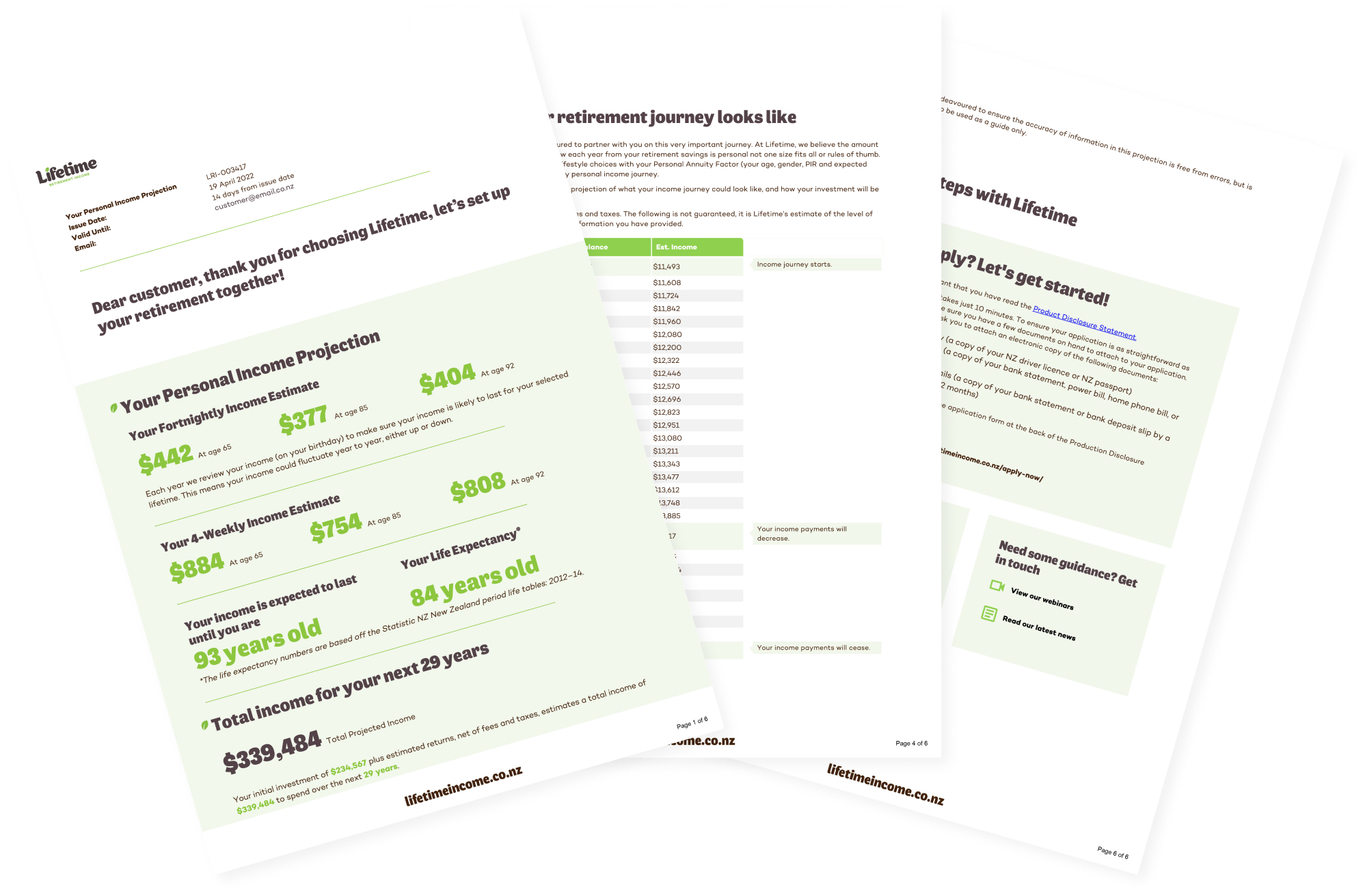
How much could you get a fortnight?


|
|
|
|
|
|
|
|
|
|
|
|
|
|
|
Looking under the hood
The Financial Markets Authority characterises balanced funds as having a ‘moderate’ risk investment strategy, with a more equal split between income and growth assets - with typically around 35–63% in shares and property (growth assets).
Specialist retirement income funds might look similar on the surface to the average balanced fund, but dig deeper, and you'll find they're structured differently so investors can get regular drawdowns from their savings.
Specialist retirement income funds are likely to:
- Hold slightly more cash to help fund regular withdrawals
- Invest more heavily in assets that provide income, such as dividend-paying shares and bonds
- Manage ‘portfolio rebalancing’ with a focus on providing smoother returns and supporting ongoing withdrawals
How Lifetime Retirement Income fits in
Lifetime Retirement Income has been specifically designed for people in retirement.
Rather than simply growing your savings, its fund is structured to provide a regular fortnightly drawdown to help supplement NZ Super, while keeping the remainder of your savings invested.
What makes it different is its personalised approach. Drawing on specialist retirement income expertise from the United States, each investor's position is reviewed annually on their birthday. The fund then recalibrates to reflect factors such as:
- Investment performance
- Inflation
- Changes in life expectancy
- The amount remaining invested
The goal is to help ensure your income remains sustainable throughout retirement, giving you greater confidence that your savings can support the lifestyle you want for years to come.
Lifetime Asset Management Limited is the issuer and manager of the Lifetime Retirement Funds. Please see our Product Disclosure Statement at lifetimeincome.co.nz.
The advice given here is general and does not constitute specific advice to any person.
Project your retirement income.

Written by:
Sonia Speedy
Sonia Speedy has been a journalist for over 20 years, working in newspapers, magazines and radio. She also runs an online platform for parents at familytimes.co.nz. She lives on the Kāpiti Coast with her young family and loves writing stories that help make people's lives easier.
Invest with Lifetime for a retirement income managed for living.