Retirement Life
8 April 2026
How to spot a Facebook Marketplace scam
You spot it while scrolling late one night. The extremely hard to find Christmas present your grandchild has been begging for.
You message the seller who replies instantly. It feels like your lucky day.
But is it?
For thousands of New Zealanders each year, what begins as an exciting online bargain ends in frustration, financial loss, and broken trust. Facebook Marketplace has become one of the country’s most popular places to buy and sell second-hand goods, but it is becoming a tool for scammers too.
In 2025, 33% of New Zealanders were scammed by online shopping, the National Cyber Security Centre reports. This translates to a whopping $1.6 billion in losses for these Kiwis and Facebook Marketplace can be one of the places this happens.
Why Facebook Marketplace is a target
How much would you get a fortnight with Lifetime?

It’s not just the vulnerable that get scammed these days - scammers are becoming increasingly sophisticated. And Facebook Marketplace scams work because the platform feels personal. You’re not dealing with a faceless company, but with ‘someone just like you’. This sense of familiarity creates trust. And scammers know it.
Fake accounts can be created in minutes. Profiles can be filled with stolen photos and convincing details. From the outside, many scam accounts look genuine.
Add the pressure of competition into the equation, ‘Someone else is interested’, ‘Pay now to secure it’, and people often act before thinking.
How to tell a Marketplace scam
Most Marketplace scams start in ordinary ways. A listing appears with an unusually low price. The photos look professional. The description sounds friendly and believable.
But once contact is made, the scammer works quickly to build confidence. They may be polite, responsive, and reassuring. They might claim they’re moving house or leaving the country. But soon, small warning signs appear.
Here are some red flags to watch out for:
- Insisting on postage only
- Trying to move the conversation to text or email
- Suggesting unusual payment methods
- Sending screenshots of ‘proof’ they’ve already shipped the item
When they buyer is the scammer
In other cases, it’s the buyer that’s the scammer. They pretend to overpay, then ask for refunds, sending fake payment confirmations. They request verification codes sent to your phone, claiming it’s part of the process.
Once money or personal information is handed over, the scammer disappears with your details.

Common Marketplace tricks to watch out for include:
1. Using gift cards. Scammers ask for payment in gift cards because they are difficult to trace and nearly impossible to recover.
2. Shipping scams. Victims receive fake tracking numbers or are told their parcel is ‘delayed’ repeatedly until communication stops altogether.
3. The ‘bait-and-switch’ scam. This is when the item delivered is broken, fake, or completely different from what was advertised. Sometimes, nothing is delivered at all.
4. Phishing scams. These use links that look legitimate but lead to fake websites designed to steal passwords and banking details. Verification code scams allow criminals to hijack and drain your bank accounts and use them to target new victims. Don't share verification codes with anyone.
Each method is designed to look believable and to make victims feel responsible when something goes wrong.
What to do if you’ve been caught out
If you think you’ve been scammed, the most important thing is to act quickly.
- Save everything: messages, receipts, screenshots, profiles, and payment records. Report the account to Facebook.
- Contact your bank or payment provider immediately and ask about fraud protection.
- Report the incident to CERT NZ and the Police. Even if your money cannot be recovered, your report may help prevent future scams.
Talk to someone you trust. Being scammed can feel embarrassing, but staying silent only benefits the scammers.
Project your retirement income.
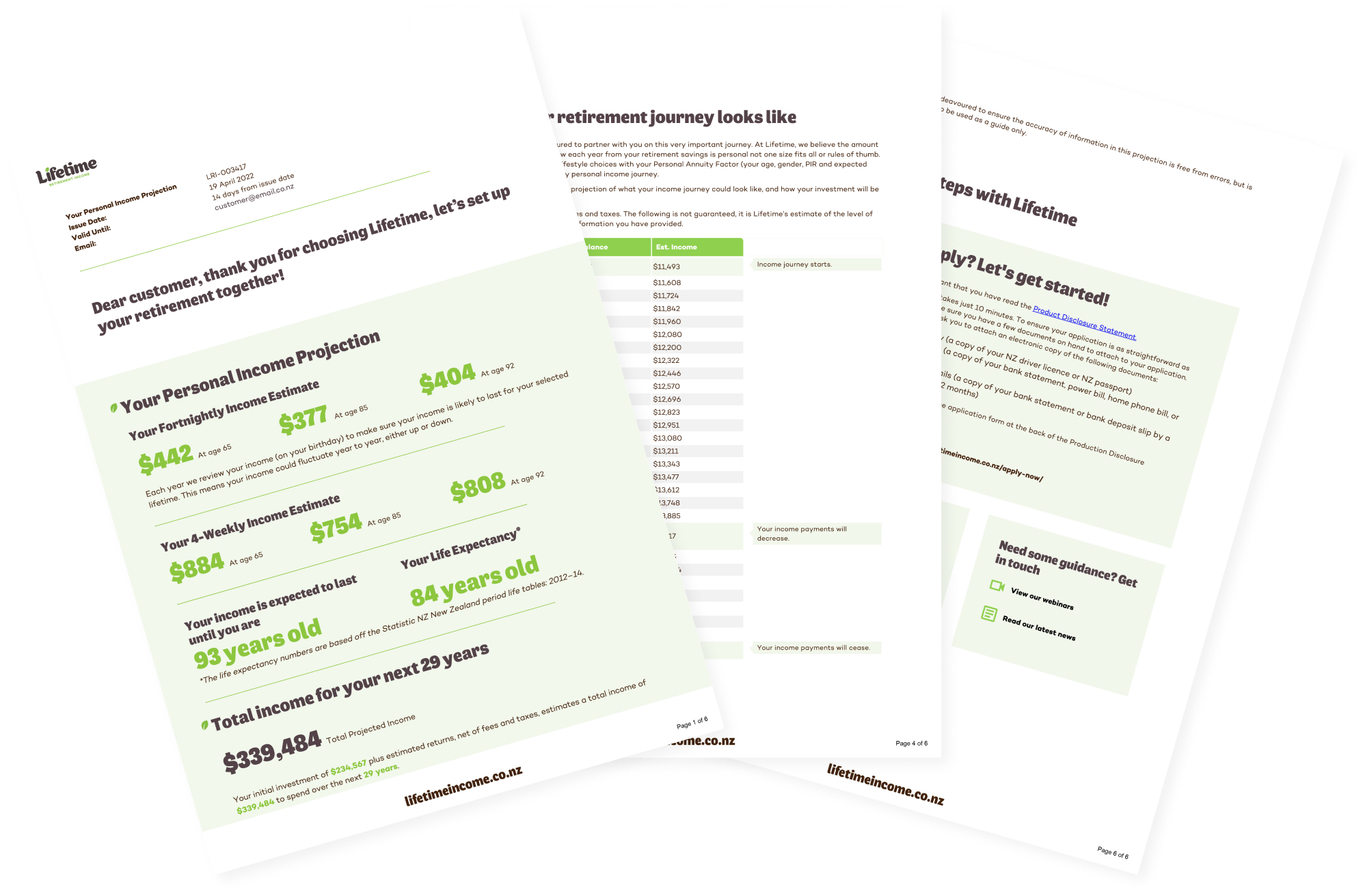
Invest with Lifetime for a retirement income managed for living.