News
13 October 2026
Insights from the road
What are retirees really worried about right now and how are their attitudes changing? Those are the questions Ralph Stewart, managing director of Lifetime Retirement Income, and chief marketing officer Chelsea Devlin tuned into during their recent Spring Seminar Series.
Speaking to hundreds of attendees across nine locations around New Zealand in September, the pair gained valuable insights into retirees' financial concerns, priorities and changing attitudes toward retirement savings, which we’re keen to share with advisers.
Two themes stood out
Firstly, that long-standing reluctance to spend retirement capital is finally beginning to thaw.
And secondly, retirees are beginning to recognise that accumulating savings is only half the retirement income puzzle – and that decumulation is a complex and nuanced problem.
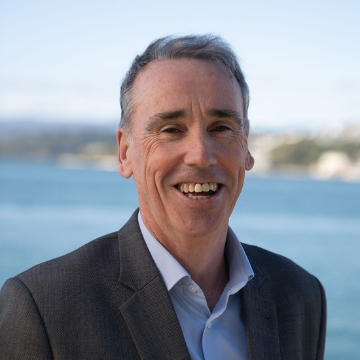
Ralph Stewart (Managing Director of Lifetime Retirement Income)
The retirement income mindset is changing
For years, retirees have been cautious about drawing down their retirement savings, even when doing so could improve their quality of life.
That reluctance hasn't disappeared, says Stewart, but attitudes are evolving.
“We have been doing retirement income seminars for a decade or more now, and this reluctance barrier is certainly breaking down – typically driven by the expanding gap between NZ Super and a better-than-basic lifestyle,” he says.
“The people we spoke with were definitely more inclined to use capital to support their income than they had been in the past.”
“The people we spoke with were definitely more inclined to use capital to support their income than they had been in the past.”
—Ralph Stewart (Managing Director of Lifetime Retirement Income)
Saving is only the beginning
A strong message emerging from the seminars was that many New Zealanders are now starting to appreciate the difference between saving for retirement and living off those savings in retirement.
For decades, the nation has focused on building retirement savings. But once retirement arrives, an entirely new challenge begins, which people can find confronting – and often surprising.
"The harder task is converting a finite pool of savings into an income that can support an uncertain number of years, while managing investment risk, inflation, unexpected expenses and personal priorities," Stewart says.
"The job isn't finished when you've reached a target balance. People are beginning to understand that."
For advisers, this represents an important shift. Clients are becoming more receptive to conversations around decumulation and what that might look like for them.
Stewart says he and Chelsea use the table below on the road to explain the difference between saving for retirement and spending in retirement and believes it may be useful to advisers explaining the same thing to clients.
How much could your clients get per fortnight?
Saving for retirement versus spending in retirement
| Saving for retirement | Spending in retirement |
The principal decision is usually how much to save and where to invest it |
The retiree must decide how much to spend, how much to retain, and how remaining funds should be invested |
Employment income generally continues |
Employment income has ceased or reduced, so withdrawals must meet everyday living costs |
The time horizon is broadly known - retirement lies ahead |
The retirement horizon is uncertain because no one knows how long they will live |
Poor investment outcomes can sometimes be offset by saving more or working longer |
Poor early returns combined with withdrawals can permanently reduce the capital available to generate future income |
The objective is commonly expressed as a target savings balance |
The objective is a sustainable, often inflation-adjusted, income that supports the person's preferred lifestyle |
A strong appetite for advice
Another recurring theme was the appetite for practical guidance.
Attendees weren't simply looking for more information. They wanted help understanding their options, asking the right questions and making decisions with confidence – the domain of financial advice.
Stewart says the word ‘retiree’ often evokes images of people living comfortably off NZ Super and investment savings, but the reality is far more nuanced.
"We met people facing a wide range of circumstances," says Stewart. "Some were dealing with housing challenges, health costs or family commitments. Others were trying to reconcile their retirement aspirations with the income they actually had available."
The asset-rich, income-poor
A common situation encountered was retirees who had accumulated assets but were uncertain how to turn them into sustainable income.
"We repeatedly met people who had wealth but didn't necessarily have accessible income," Stewart says.
For the majority of attendees, NZ Super was providing an essential base income but was often not stretching far enough to maintain their previous standard of living – or absorb the unexpected costs that inevitably crop up.
“There were numerous lightbulb moments when we explained how mortality improvements work, and the importance of annual reviews to maintain a regular retirement income supplement for 20 years or more,” Stewart says.
One of finance's toughest challenges
Stewart points to renowned economist William Sharpe's observation that sums up the retirement income dilemma.
“Turning retirement savings into a sustainable income is one of finance’s hardest problems. Unlike saving, retirement-income planning requires people to make ongoing decisions under uncertainty - balancing today’s spending with the risk of living longer than expected, inflation, investment-market volatility, unexpected costs and the desire to retain flexibility or leave an inheritance.”
The seminar conversations across the country suggest more retirees are beginning to appreciate this challenge. For advisers, that presents an opportunity to help clients navigate one of the most important financial transitions of their lives.


Written by:
Sonia Speedy
Sonia Speedy has been a journalist for over 20 years, working in newspapers, magazines and radio. She also runs an online platform for parents at familytimes.co.nz. She lives on the Kāpiti Coast with her young family and loves writing stories that help make people's lives easier.