News
15 May 2026
Defeating death: why mortality improvements can derail retirement plans
A common - and costly - mistake advisers make when setting retirement drawdown levels is overlooking mortality improvements and the risk they pose to long term client outcomes, says Ralph Stewart, founder and managing director of Lifetime Retirement Income.
In this third article in our series on the need for professional investment management support in retirement planning, Stewart explains what mortality improvements are, why they significantly affect retirement drawdowns, and how Lifetime helps advisers bring greater certainty to an inherently uncertain problem.
What are mortality improvements - and why do they matter?
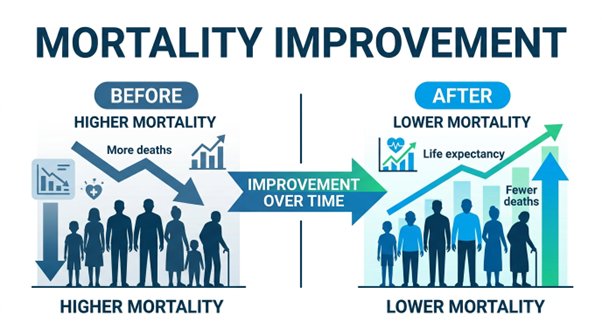
Mortality improvements refer to reductions in death rates over time. Put simply, they reflect people living longer, or fewer people dying at a given age, and how that changes from one year to the next.
Crucially, mortality improvements are not static. They evolve continuously, shaped by medical advances, public health outcomes and lifestyle changes. This means the assumptions used when a client retires at 65 may be significantly outdated by the time they reach 75.
“We’re often asked to review drawdown calculations for advisers,” Stewart says.
“And the common issue we find is a lack of awareness of these mortality improvements, which is understandable as it is such a dynamic component of retirement planning.
“However, it’s important to get a handle on it, or you risk leaving your clients high and dry at the end of their retirement - when the money doesn’t stretch as far as it needs to and they outlive their original ‘longevity’.”
For advisers, this risk shows up at the worst possible time - late in retirement, when clients have little capacity to adjust spending or replace lost capital.
Mortality improvements versus longevity
Longevity and mortality improvements are often conflated, but they describe quite different things.
Longevity is a snapshot. It reflects how long people are expected to live based on today’s assumptions and produces a single expected age or life expectancy.
Mortality improvements, in contrast, describe the rate of change in those expectations over time. They explain why a life expectancy calculated today is likely to increase as time passes.
In other words, longevity might tell you how long a client is expected to live today. Mortality improvements describe how much longer that estimate may stretch out as assumptions continue to improve.
For retirement drawdowns, this distinction is critical. Focusing solely on longevity can lock clients into assumptions that become obsolete surprisingly fast - especially over multi-decade retirements.
“Fail to factor in mortality improvements, and you risk failing your client,” Stewart says.
Why mortality is such a difficult variable to manage
Advisers face a complex balancing act when setting sustainable drawdown rates. Key inputs include investment returns, tax rates, mortality, mortality improvements, inflation and individual spending behaviour - all of which change over time.
So how can advisers have confidence when every component is variable?
“Greater certainty is achieved when a constant review process is in place, and any ‘set-and-forget’ approaches are binned,” Stewart says.
“You can’t research a longevity number for the client before they retire, and then lock that in. It needs constant revising, or mortality improvements will blindside you,” he says.
Gender-based differences further complicate mortality assumptions. Women have a life expectancy at birth around three to four years higher than men, and at age 65, women typically live two to three years longer than the average remaining life expectancy for men.
“In short, both male and female mortality in New Zealand has improved,” Stewart says.
“So if a couple are aged 65 and then lives to 75, their life expectancy at 75 will become longer than it was predicted to be at age 65.”
And the effect of mortality improvements compounds over time.
“A 65-year-old male with a life expectancy of another 21 years can expect that original number to extend out to 24.5 years if he gets to 80, due to the mortality improvements at play during that time,” Stewart says.
How Lifetime incorporates mortality improvements
Lifetime addresses these uncertainties through a structured, ongoing review process designed to evolve alongside a client’s retirement.
“Each year during the client’s birthday month, Lifetime completes a comprehensive reassessment to ensure drawdown levels remain appropriate for the client’s expected lifespan. It factors in those mortality improvements,” Stewart says.
The annual review includes:
- Reassessing the client’s (and partner’s) current age and mortality
- Reviewing the current account balance
- PIR rate tax check
- Assessment of latest returns and volatilities
- Updated probability assessment
- Latest inflation forecasts
- Expected mortality improvement rates
- Consideration of any unique health requirements
- Opportunity to recalculate if circumstances have changed
These regular reviews leave advisers better positioned to serve their clients well and protect them from running out of income when they may need it most.
Try our Adviser Income Calculator today or talk to Chelsea Devlin about a distribution agreement for Lifetime Retirement Income.
Previous articles in this series include:
- Why does everyone have to live to 90?, exploring the challenges of longevity planning; and
- Are your clients’ retirement drawdowns at risk of revision? Examining why a robust actuarial framework is essential to avoid repeated drawdown changes.

Written by:
Sonia Speedy
Sonia Speedy has been a journalist for over 20 years, working in newspapers, magazines and radio. She also runs an online platform for parents at familytimes.co.nz. She lives on the Kāpiti Coast with her young family and loves writing stories that help make people's lives easier.
Invest with Lifetime for a retirement income managed for living.